Instructions For a New Body
My thesis investigates the relationship between humans and technology through a hybrid media video and physical installation. Drawing on Jean Baudrillard's theory of simulacra and posthuman frameworks articulated by Rosi Braidotti and Donna Haraway, the project examines how identity and agency are constructed, mediated, and reproduced within digital culture. It questions the shifting power dynamics between humans and machines as individuals increasingly concede agency to technological systems. Inspired by the strategies of artists such as Hito Steyerl, particularly her work How Not to Be Seen: A Fucking Didactic Educational .MOV File, the project adopts a self-reflexive, instructional video format that embodies, rather than directly critiques, systems of surveillance, visibility, and technological entanglement.
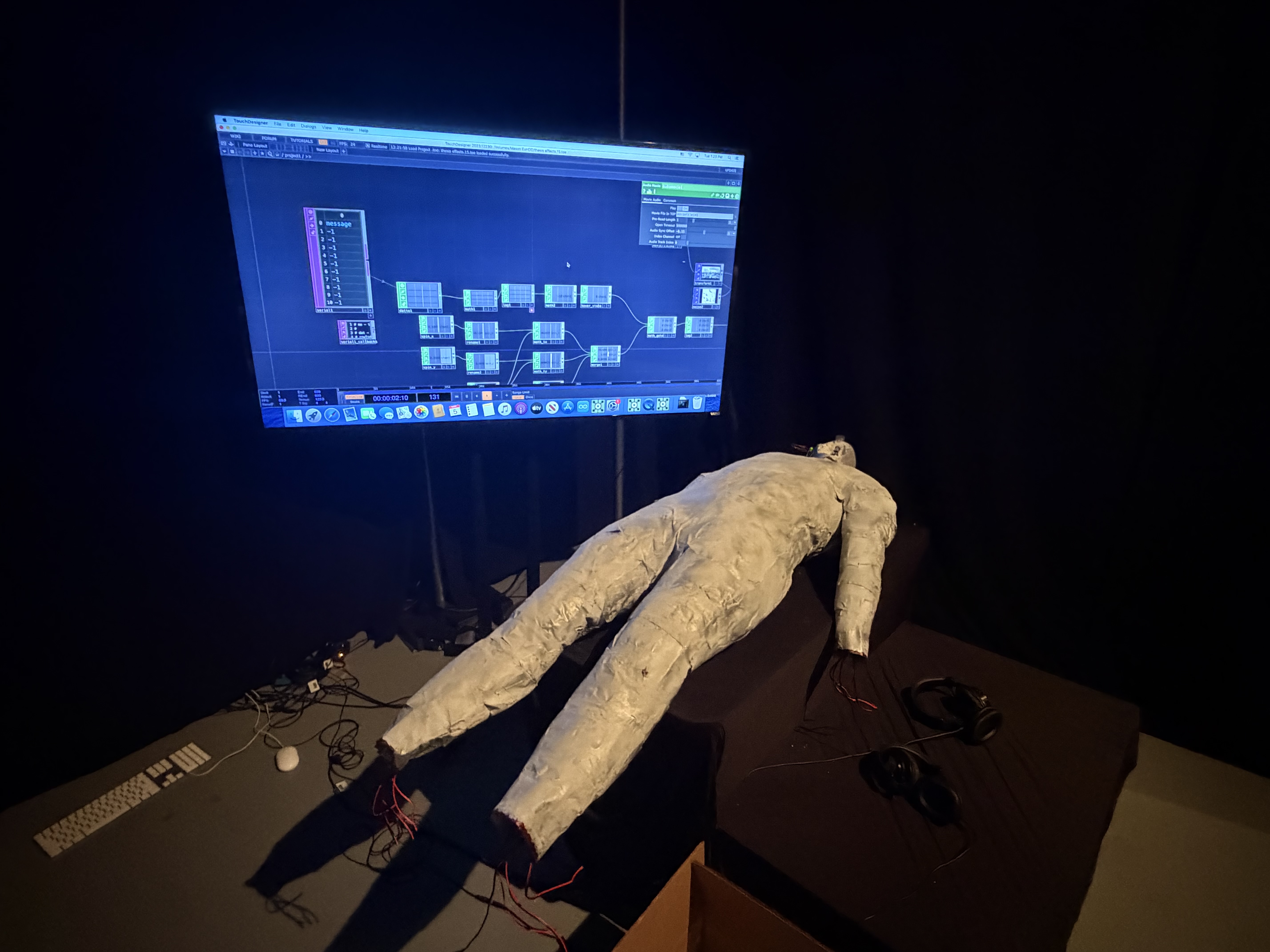
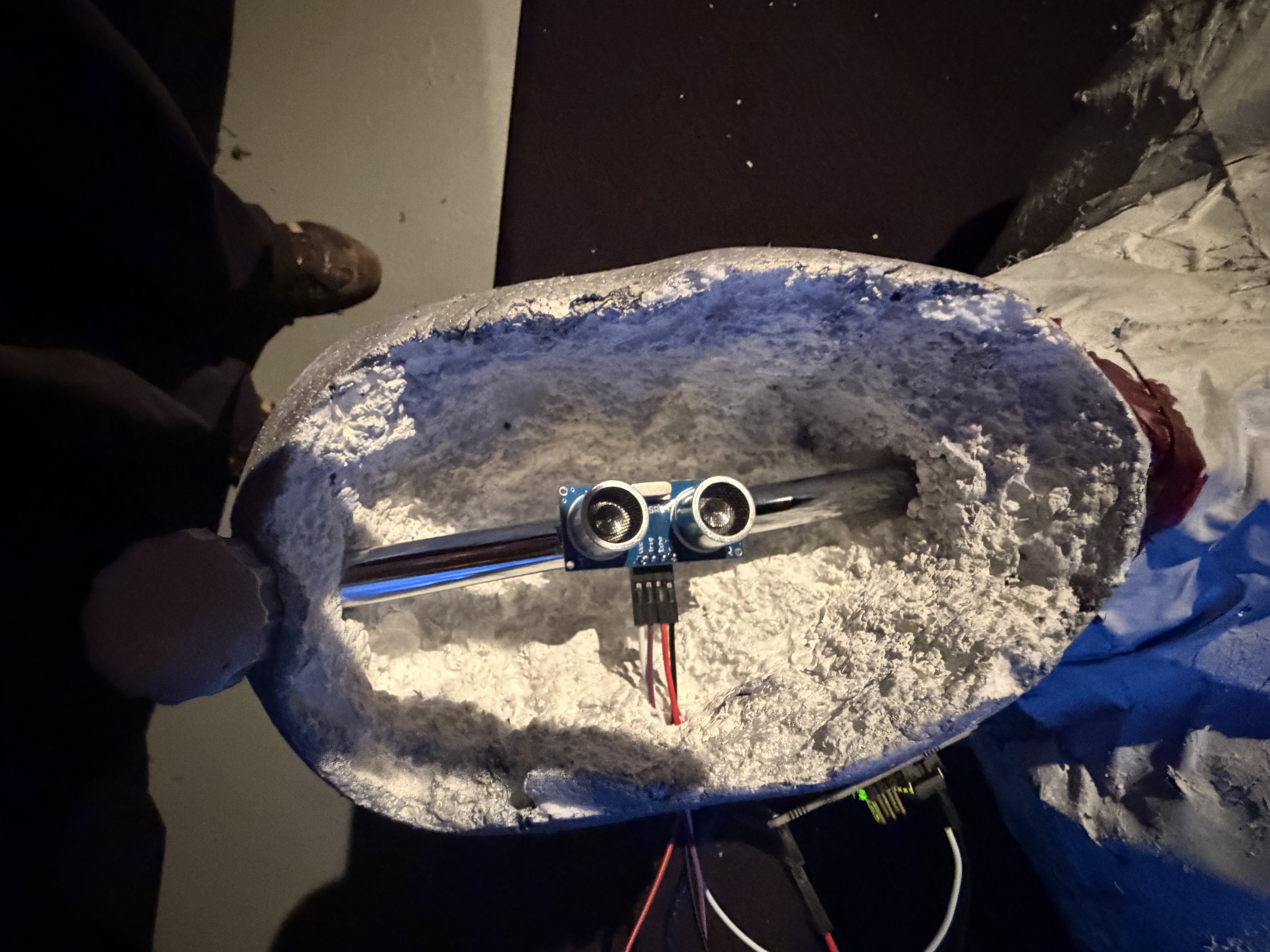
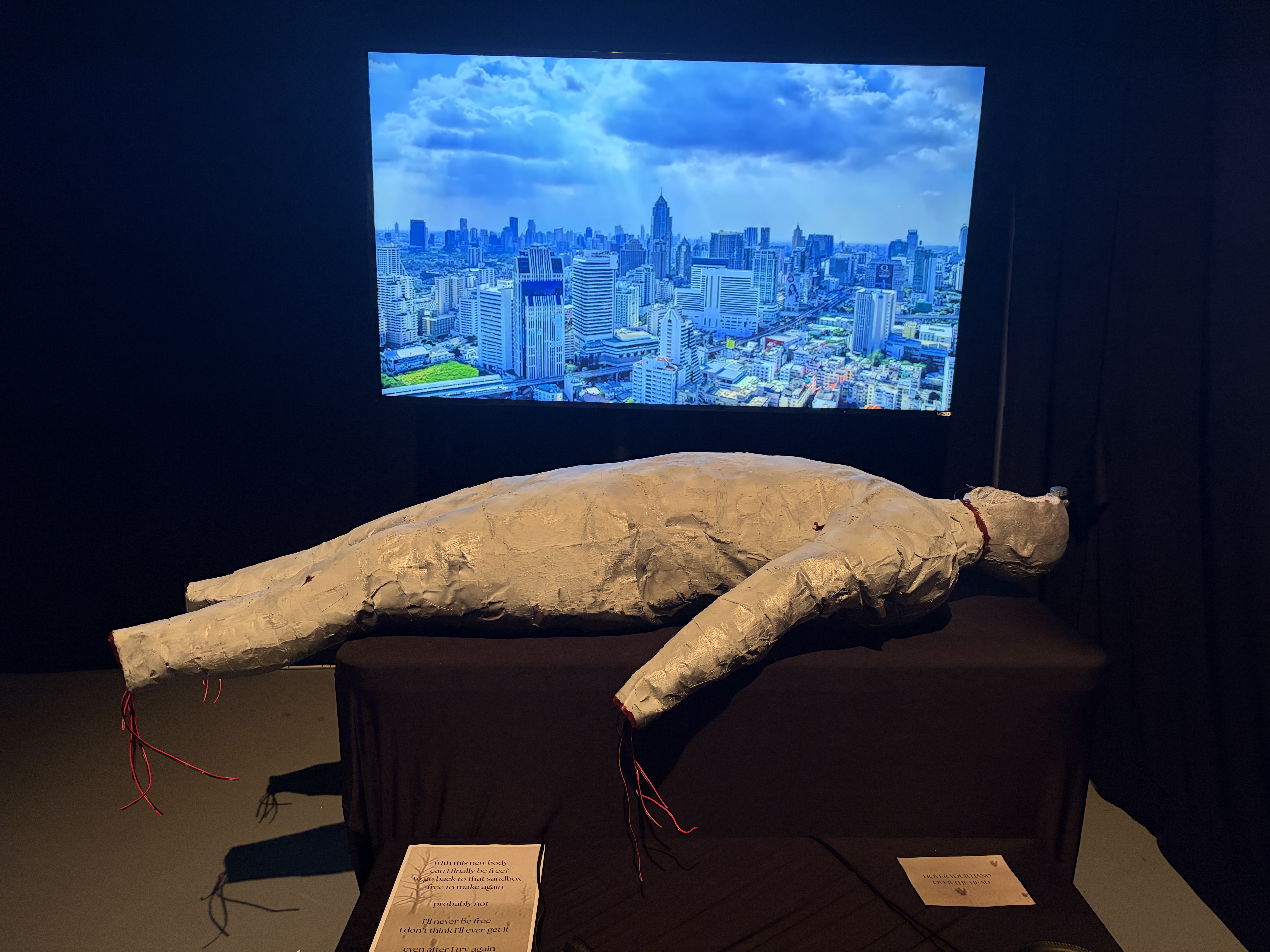
By combining digital models, distorted footage, and a sculptural humanoid form augmented with interactive electronics, the installation stages the instability and hybridity that characterize contemporary subjectivity. A motion-sensor-activated video component and an Arduino-based sensor system extend the project's exploration of mediation into the viewer's physical encounter with the work, distorting the screen in response to movement. Through the interplay of video, simulation, and material presence, the installation investigates how reality is shaped through digital interfaces and how human identity becomes performative, networked, and increasingly inseparable from technological systems.
Instructions For a New Body explores how digital culture reshapes reality and human identity through hybrid installation, examining the ways identity and agency are mediated within contemporary technological systems. The work employs a self-reflexive instructional format that foregrounds surveillance, visibility, and digital entanglement. Visibility and obscurity structure the piece, as the still body becomes a vessel for transition into an all-encompassing digital reality. Within this hyperreality, representations no longer refer to a stable or original real; instead, identity becomes unstable, performative, and continuously reconstructed through participation in networked systems.